
America. It's Complicated.
Six years later and little has changed

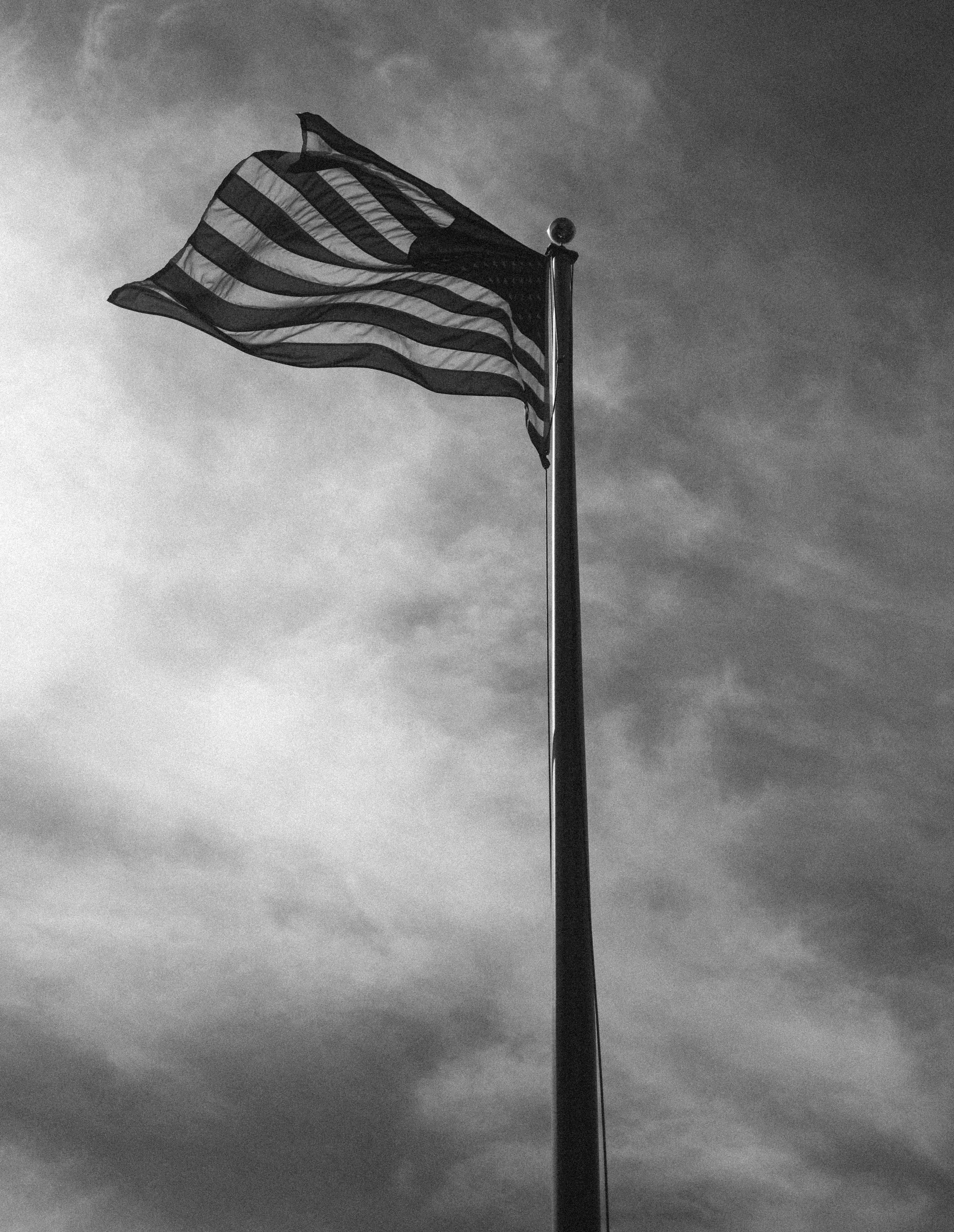
Independence Day in America is upon us. So much about the meaning of this day for me has changed over the years. When I was a young boy, the Fourth of July was a magical day. Sunshine, hot dogs, bike rides, fairs, parades, flags waving, firecrackers, and fireworks in summer’s night sky. As an adult, however, the meaning of the Fourth has shifted, morphed, and been reshaped many times over.
It’s complicated.
Six years ago, I began writing my memoir Walks with Sam, a book about walks with my dog and how the dog helped me to see the world. In that book is a chapter entitled “America.” I revisited that chapter recently and was struck by how so little has changed. My view of Independence Day, of America’s past and future, and the lies we tell ourselves about the U.S.A. has morphed so many times. It’s hard to admit that sometimes America has not been the “greatest country in the world,” and that it has not always been on the right side of history. What is true is that the idea of America remains a beautiful thing. We may never see its full potential, but out there on the horizon is something remarkable. And despite its flaws, we want to believe in it.
Here is that chapter from Walks with Sam.
I wonder how your relationship with the Fourth has changed or not in recent years.
AMERICA
It’s early morning on the Fourth of July and Sam is wearing a red, white, and blue scarf, a cloth bandana with images of nautical flags tied around her neck. It’s a touch of the holiday from the groomer. I never liked those silly scarves, but it’s Independence Day, so I tolerate. Still, it feels like forced patriotism.
We walk a quiet neighborhood. No one is outside in the first couple of blocks. But signs of The Fourth are everywhere—red, white, and blue door ribbons at a front entrance to one home, small American flags line the walkway of another, a child’s bike rests in a yard with the spokes of its wheels laced with crepe paper in American colors. One would sense a bit of pride running through these streets, pride in country, pride in the American way, whatever that is, despite the rat’s nest we are in—trade wars with China, a war of words with North Korea, deep questions about immigration, and a president with zero class, no empathy, and questionable ethics.
“What is it we are celebrating here, Sam?” I ask.
Sam sniffs day lilies along the parkway on the street near the railroad tracks.
We head east and the neighborhood begins to come alive—a runner, a couple of early dog walkers, and several adults on bikes, one after another. This is not the usual morning crowd; these are the holiday people, the ones taking advantage of the day off to get outdoors before breakfast, before firecrackers snap, charcoal burns, and the town’s parade steps off.
I stop at the corner and look at Sam. That stupid scarf. I untie it, remove it, and tuck it in my pocket. Sam does not protest.
It’s an odd relationship I have with this holiday. I love my country, even though I’m not sure what that really means. I believe patriotism also means pointing out what needs work, what needs attention, what we do wrong and maybe how to change it. I scowl at nationalism, the sightless admiration of a country just because it’s your country. I was never in the military. Missed the mandatory draft. Wouldn’t have gone to Vietnam if called on, instead I would have left on a bus to Montreal. And my father, who was a veteran of the Korean War, told me he would have bought the ticket. My relationship with America is complicated.
“Sam,” I think aloud, “would you fight for your country?”
Dogs have a long history of being in warfare. In ancient times, dogs were scouts. The Egyptians, Greeks, and Persians used them as sentries and patrols. George Washington, who would later be named the Commander and Chief of the Continental Army, brought his favorite dog—Sweet Lips—with him when he attended the First Continental Congress in 1774. It makes sense. Dogs are so keenly loyal, a trait necessary for military service. The animals in the pack survive because members of the group depend on each other, not unlike a military unit, a squadron, a platoon.
Still, despite my complex feelings about this country, its military hubris and its tendency to forget history, it is hard on his day not to feel something good about America. It remains a shining light for many, despite its imperfections. After all, the day is not meant to be about military service but rather a celebration of an incredible idea—American democracy, even if it is flawed, flawed when the Founding Fathers gathered in Philadelphia, and flawed today. Flawed like all of us, like our heroes, our families, our lovers, our friends, and even our dogs. And, on the matter of whether Sam would fight for the country—she wouldn’t, unless I trained her to do so. Like humans, dogs are not natural fighters. Their instinct, like ours is to want to bond. If a dog is a fighter, it’s been conditioned to be that way by a human being, who, for whatever reason, believes the animal must be aggressive, combative. Dogs, like us, don’t want to fight. They want to love and be loved. I like to think that instinct is more linked to the idea of America than warfare. Even though we fought bloody battles for our independence, what makes us a virtuous country is our ability to want to bond, to be empathetic. America is like Sam. It wants to love and be loved, and to accomplish this, it doesn’t need to blindly wave its flag or wear a silly red, white, and blue scarf around the necks of its dogs.
Walking north now toward home, I see a small dog, a terrier of some type, sniffing around a garage door. It is untethered, free and roaming. The dog sees us, Sam and me, and scampers closer. Sam notices and pulls her leash. She does not bark or growl, instead there is simple interest. Who is this dog? We slow down and the dog follows, its tiny tail raised and twitching. “Hello,” I say. The dog ignores my greeting and rushes to Sam. The two dogs sniff each other. And from over my shoulder I hear, “Can you grab him?”
A woman walks barefoot from two houses south, carrying a small leash.
“He got out the back door,” she says.
I reach to corral the dog, but it darts into a yard a few feet away. Sam pulls toward it and blocks the dog in between a large bush and a tree, as if to keep it from dashing off. Sam then stands close to the dog, her long legs on either side of it, obstructing its movement.
“Thank you,” the woman says to me. “And thank you,” she adds, nodding toward Sam.
“Almost looks like Sam knows what she’s doing,” I laugh.
“Oh I think she knows,” the woman says and reaches to pat Sam’s head. “She was trying to be helpful,” she adds in baby talk.
I’m not ready to give Sam that much credit, but it would be nice to think she truly had been trying to help, that she cared about the little dog’s safety, about the woman and her worries that the dog might be too hard to catch. It would be lovely to think Sam had been showing compassion; that her instincts were for good, that community was on her mind. It would be wonderful to believe that Sam may understand the whole of us, what really matters. America’s educational system may be woesome. We imprison too many people, our healthcare system is an inequitable mess, too many of us own too many weapons, we are chums with authoritarian leaders we should ostracize, racism runs through us like gangrene. But, what we have above it all is collective empathy. I believe that.
After thanking us again, the woman leashes her dog, and as she walks back home, she calls to us, “Happy Fourth!”
Sam and I head to our back yard and I toss around one of the tennis balls that litter the lawn. It’s far too early for fireworks, it’s not time to light the grill, and the band members in the parade have not yet gathered to play Sousa’s “Stars and Stripes Forever,” but Independence Day is here, and one can trust that the idea of America might still be alive, that its people and its dogs might still believe this lofty experiment has a chance.
David W. Berner is the author of several books of award-winning fiction and memoir. His latest poetry collection, Garden Tools is available from Finishing Line Press. He is the Poet Laureate of the Village of Clarendon Hills, Illinois and his novella, American Moon will be published by Regal House Publishing on September 15, 2026 and is currently available for pre-order.
Receive a monthly newsletter with reading tips, music to listen to, and the latest on David’s writing. Sign up for free here.

You hit many nails on the head with that one.
A Lesson from our German foreign exchange student, Jan 2015 -- one of the first things she commented on: our flag on front of house. "We would never do that," she said.
Nationalism is nauseating. As a strong military family, we no longer fly the flag. Instead, we have a small Navy flag
It's as though DJT's many photo ops of hugging the flag turned our stomachs. And J6-ers who carried the flag into the rotunda as they took whizzes & craps on politicians desks and all that America is supposed to be.
We still believe in the "idea" of America. But 2020 and Derek Chauvin and DOGE and ICE, it all sickens us.