
Instant Poetry
My first day of creating poems on the spot

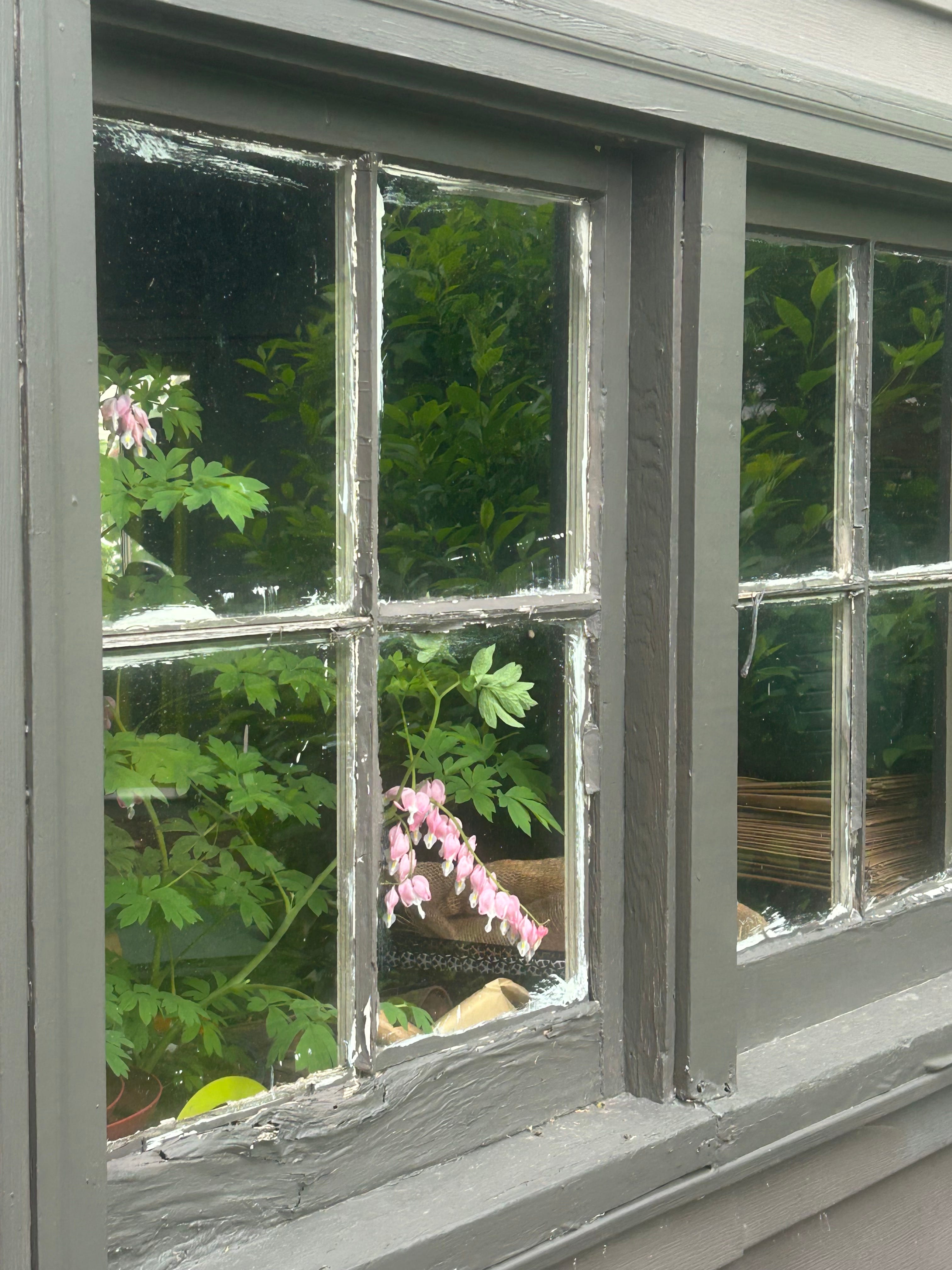
The temperature on my phone read 41-degrees. Chilly, but the sun was shining, and the angle of the low morning light through a window touched a flowering plant that my wife had been harboring in the garage at night to help acclimate it to the real world. Along with this perennial, arriving to our home from the safety of a greenhouse, my wife had been growing vegetables and herbs from seed all winter inside the house under grow lights, and it was time for their initiation into the open. Cold still, but the flowers are strong. Am I that strong? Can I stand in the chilly air behind a small desk with a 1960s-area manual typewriter in an open plaza and write poems on the spot for those buying bread, strawberries, and baskets of flowers?
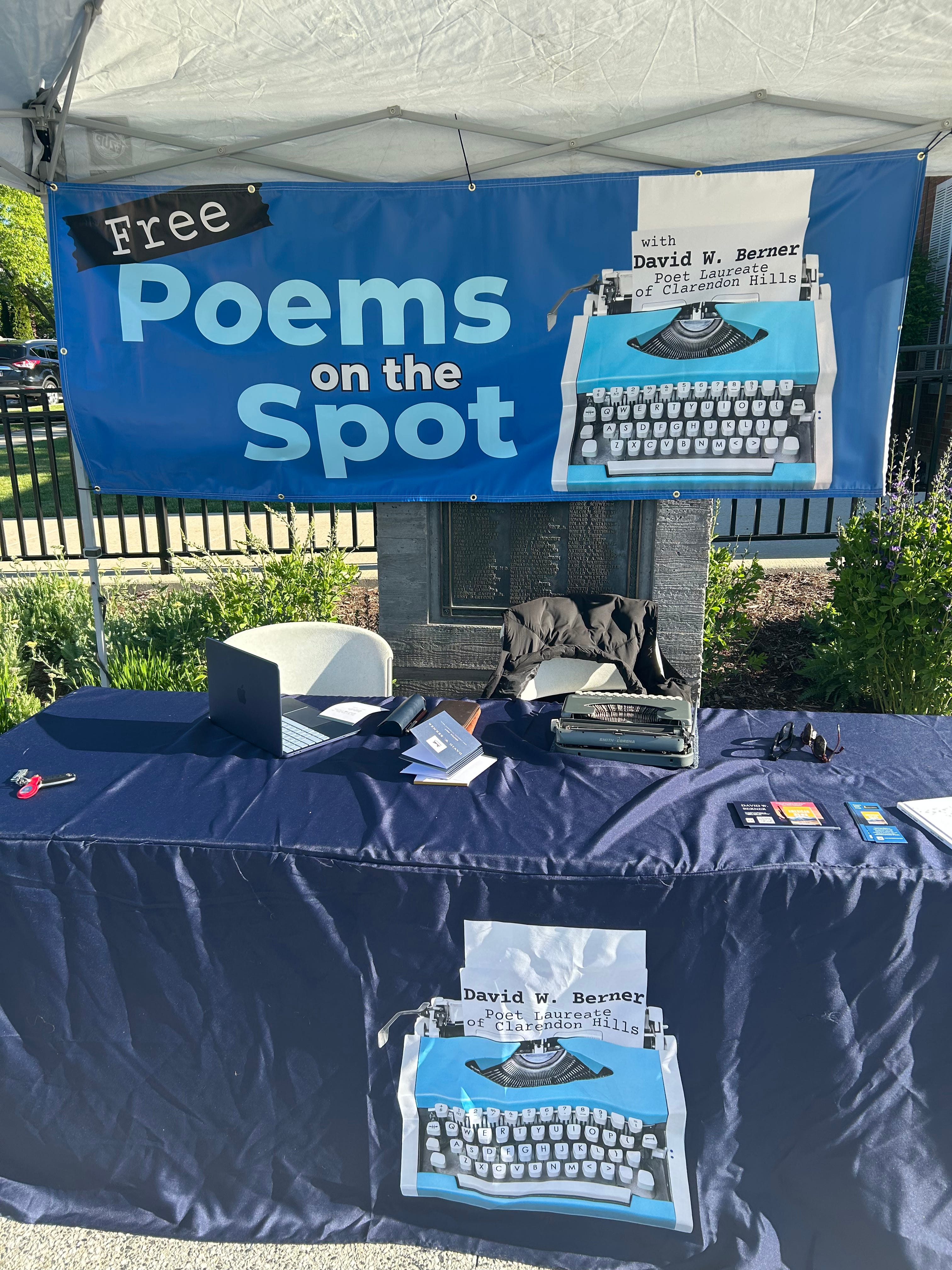
This season in the village where I live outside Chicago, the powers-that-be are offering a “bigger and better” farmers market. And, as the current Poet Laureate of Clarendon Hills, I have agreed (in fact it was my idea) to set up shop and produce on-the-spot poetry. I ask those interested what is in their heart, their heads, what gives them joy, what worries them, what inspires? And then, I write. I give them words that I hope will bring to life those emotions and awaken their unique experience.
That was the plan.
I had been familiar with poets who offered their work in this way and had always wanted to try. So, there I was. I set up the banner behind me, the typewriter on the desk, typed a few words and checked the ribbon. Placed my papers and cards that would be used to gift the poems and smiled at the passersby.
“You look like you could use a poem this morning?” I asked an older woman who had caught my eye.
“I do, do I?” she answered, smiling.
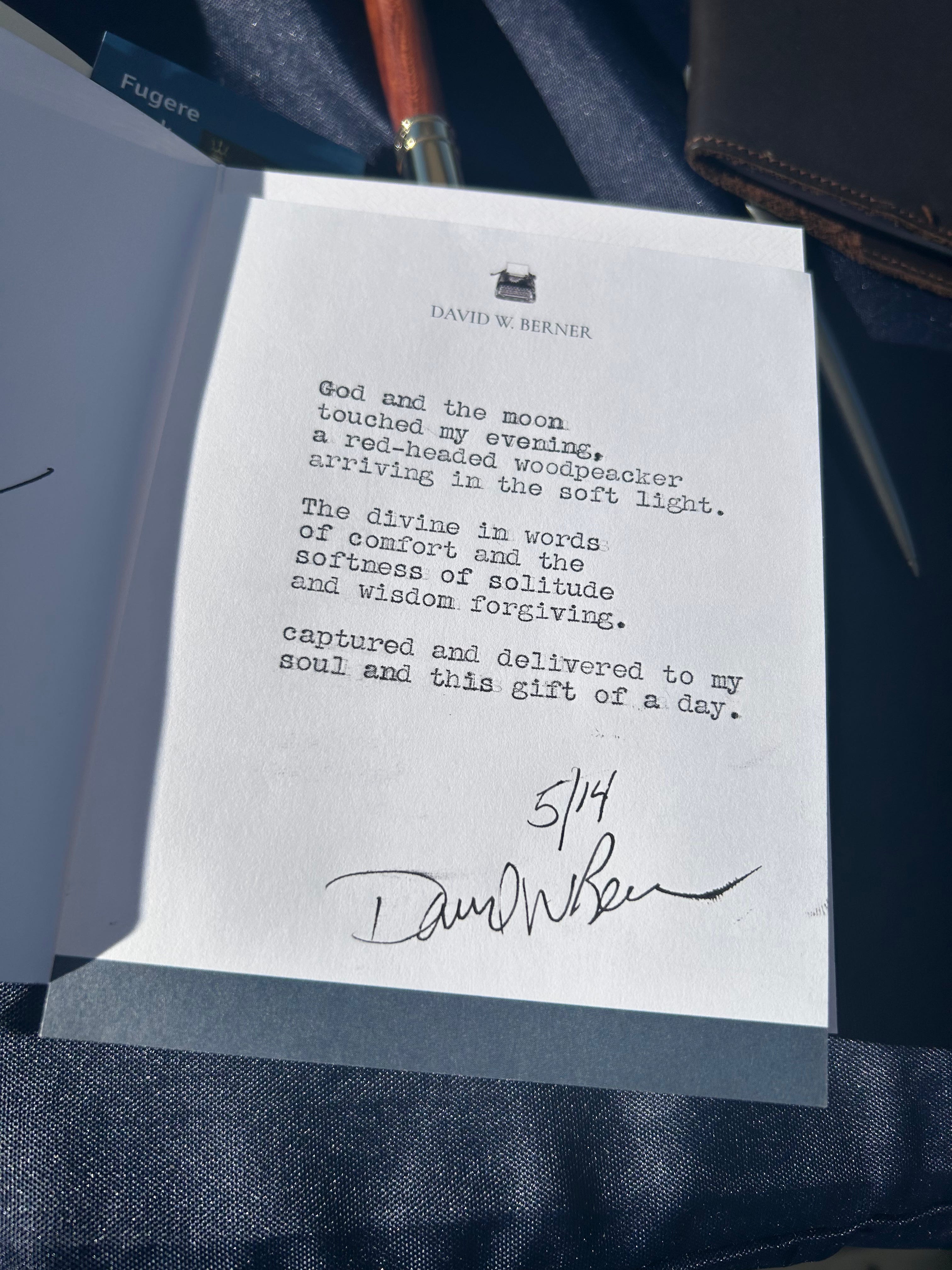
She loved nature and nature photography. She showed me some of her photos on her phone, one of a woodpecker framed by the pale moon behind. Remarkable. She had another of a rapturous vulture in a tree. What a great eye. What great photos. We talked about how she came to this pastime, how she loved nature, how she loved her hometown.
I wrote her a poem. It was decent, I thought. Far from award-winning. She held it to her chest, thanking me. I guess my inaugural poem was a reasonable success.
Others came. An older woman who had received long-awaited good news from her doctor, a mother who loved her family and wasn’t shy about telling me all about them, two old friends who had been coming to the farmers market for five years together, just to be with one another. “She’s my best friend,” she told me. I wrote more poems. More than I had anticipated. Deadlines loomed. I had to turn-and-burn, as they say. It was glorious.
In time, a young woman walked by carrying a young boy about a year old on her hip, seemingly a bit uncertain about my presence. Twenty feet past me, she turned on her heels and rushed toward me.
“What is this you are doing?” she asked in an accent from what sounded like an Eastern European country. She smiled, hesitantly. I explained my work and that I would be thrilled to write her a poem. It was a simple one about the glory of a morning like the one it had become—warmer with bright sun, more pleasant than earlier. And how embracing the day with openness can bring us all peace inside. There was nothing remarkable about the poem, I thought. She accepted the work. Thanked me. And walked away. Less than a half-an-hour later, she returned,, her eyes glistening. She wore a delicate smile.
“Thank you,” she said softly, holding the poem in her hand, still carrying the child. “Thank you, so much.”
“My pleasure.”
“You’re like a therapist. Like a shaman or something, you know?”
“Oh no. I just write.”
“I have always been shy and I’m trying to be more open to people, and I can’t tell you how much this poem did for me this morning.”
Oh my.
Then she gave me cash, a tip, she said. It was too much.
“No, no. My poems are free.”
“I would have paid a therapist a lot more,” she said, giggling.
Poems are like that. They connect in layers, in ways unknown, subconsciously. This moment was not about my poetry, about its worthiness or significance, not about how “good” my work might be. Nothing like that. The moment proved what poetry can do, any poetry that has the slightest of weight, mine or any other’s, how it can wrap around the heart, pull the delicate strings of your psyche, break open your soul. How even a few words written on-the-fly can make an indelible connection.
I wrote for two hours on my first morning as the farmers market poet, and I wrote at least eight poems. That’s one every fifteen minutes. But the frequency or the speed is not the thing, is it? No. It’s what lasts afterward. What stays with us many hours, days, weeks, years beyond.
As I was packing up for the day, one poetry recipient from earlier that morning who remained to enjoy the market with her young family called out to me. “We’re framing this one,” she said.
I had written the poem for her daughter, a little blonde girl in oversized star-shaped black sunglasses and a sparkly skirt riding a small pink scooter. She had the kind of singular presence that screamed poetry.
“That’s a very high compliment,” I said, feeling a bit overcome.
When I was leaving the market and walking to my car, the temperature had risen to 60-degrees. I thought about my wife’s gardening work, the hardening off of her plants, preparing them for the open world, and how the late morning had blossomed into an exceptional spring day, how those plants were better and stronger each day after returning to the outdoors, out into the open, taking baby steps from the house to the outside, growing hearty because they were being exposed to the world, their lives made better by allowing the breeze to embrace them, the natural light of the sun to warm them, giving each one a reason to live on.
David W. Berner is the author of several books of award-winning fiction and memoir. His latest poetry collection, Garden Tools is available from Finishing Line Press. He is the Poet Laureate of the Village of Clarendon Hills, Illinois and his novella, American Moon will be published by Regal House Publishing on September 15, 2026 and is currently available for pre-order.
Receive a monthly newsletter with reading tips, music to listen to, and the latest on David’s writing. Sign up for free here.

Therapy indeed David. What a heartwarming gift you gave those who stopped to talk with you and for those you shared a poem with. So many wonderful stories we find when we take the time to talk with a stranger. Good for you for giving of your time and talent in this way.
Lovely, David.